

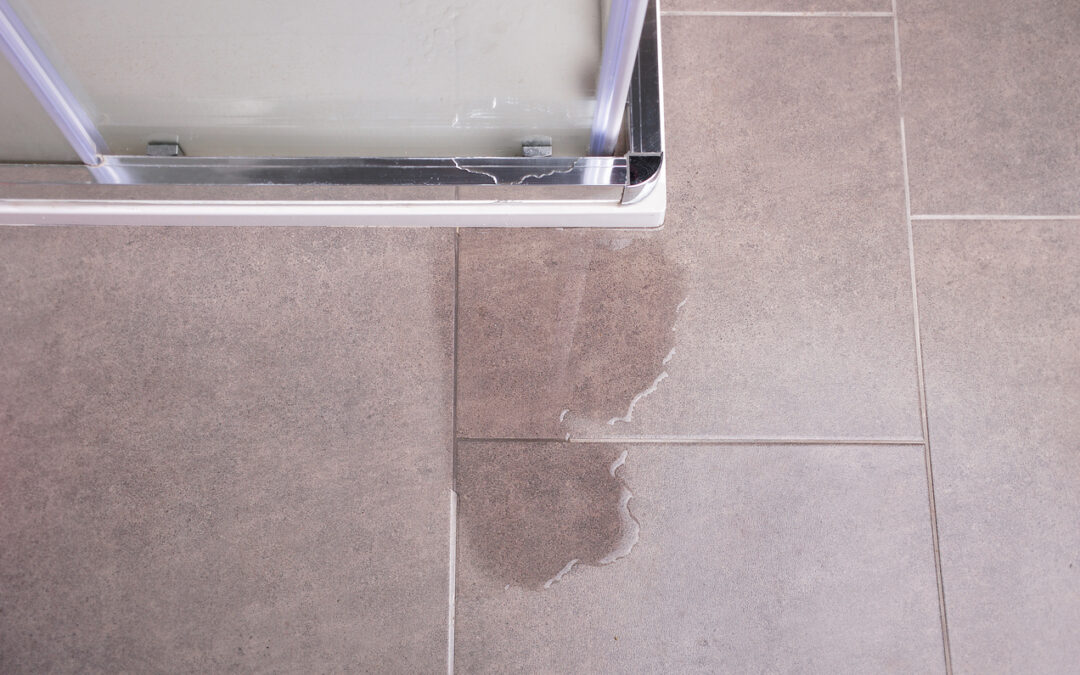
Few things ruin a relaxing morning shower quite like stepping out onto a damp bathmat—or worse, a standing puddle on your bathroom floor. If you constantly find water pooling outside your shower door, you are not alone.
While many homeowners assume a puddle means the glass itself is defective, the reality is that frameless and semi-frameless glass enclosures are engineered with tight tolerances. When water escapes, it is almost always a symptom of a mechanical seal degradation, poor glass alignment, or an underlying structural waterproofing flaw.
Ignoring standing water around your shower base can lead to swollen baseboards, lifting floor tiles, rotting subfloors, and stubborn mold growth. Let's examine the four most common waterproofing and glass seal failures responsible for water pooling outside your shower door, along with the steps required to resolve them permanently.
1. Failed, Damaged, or Missing Bottom Door Sweeps
The bottom sweep (a clear polycarbonate strip fitted with a soft vinyl fin or drip rail) is your shower door's primary line of defense against gravity. As water cascades down the inside face of the glass, the drip rail catches the stream and funnels it back into the shower pan.
- The Failure: Over time, exposure to hard water minerals, soap scum, and everyday friction causes vinyl fins to stiffen, crack, or tear away from the edge.
- The Result: Without a tight, pliable sweep beneath the glass, water running down the door glides straight under the bottom clearance gap and collects directly on your bathroom floor.
- The Fix: Replacing a worn door sweep is an inexpensive, routine maintenance task. However, if a newly replaced sweep still leaves a gap, your door hinges may have sagged out of alignment, requiring professional readjustment.
2. Reverse Pitch on the Shower Curb (The Outward Slope Error)
The threshold or "curb" underneath your shower door is designed to act as a physical water dam. During a custom build or retile project, the top surface of the curb must be installed with a subtle inward slope (roughly 1/4 inch per foot) directed back toward the drain.
- The Failure: If a tile installer sets the curb perfectly flat or accidentally pitches it outward toward the bathroom, gravity works against you.
- The Result: Any water that drips off the glass or splashes onto the curb cannot drain inward. Instead, it trickles outward under the door sweep, creating persistent water pooling outside your shower door every single time the shower runs.
- The Fix: Correcting a reverse-pitched curb typically requires removing the glass door, replacing the threshold tile or solid marble slab with the correct inward pitch, and re-securing the glass hardware.
NOTE: Self-diagnostic checks can help locate visible seal gaps, but resolving structural issues—such as incorrect curb pitch or subfloor drainage failures—requires professional tile and glass re-engineering. Attempting DIY fixes on tempered glass or tile membranes can lead to shattered panels or hidden structural water damage.
3. Degradation of Silicone Sealants at Stationary Glass Joints
Where stationary glass panels meet your tiled walls or shower curb, high-grade 100% silicone sealant creates an airtight, watertight bond.
- The Failure: Standard builders-grade caulk or improperly applied silicone breaks down after 3 to 5 years. Chemical cleaners, mold buildup, and subtle thermal expansion can cause the sealant bead to shrink, peel, or pull away from the tile grout lines.
- The Result: Water traveling down the fixed glass panel finds microscopic gaps in the perimeter bead and seeps through the joints, escaping behind or around the shower footprint.
- The Fix: Old, mildewed silicone must be completely scraped out, the joint cleaned with isopropyl alcohol, and a fresh bead of heavy-duty, mildew-resistant sanitary silicone applied.
4. Subsurface Membrane Failures & Backed-Up Drains
Sometimes, the water pooling on your floor isn't coming from a door gap at all—it is rising from beneath your tile.
- The Failure: Beneath your shower floor tile sits a waterproof pan liner or membrane designed to channel subsurface moisture toward the drain's weep holes. If the main drain pipe becomes partially clogged with hair and soap buildup, or if the weep holes are blocked by mortar, standing water accumulates inside the shower pan.
- The Result: As water rises inside a slow-draining shower, it overflows the curb or saturates the unsealed grout lines around the perimeter, capillary-wicking water outward beyond the enclosure walls.
- The Fix: Clearing drain lines, flushing weep holes, or—in severe cases of membrane failure—rebuilding the shower pan assembly with modern bonded waterproofing systems.
How to Prevent Future Enclosure Leaks
Preventing water damage requires a combination of smart design choices, proper hardware alignment, and routine care:
- Aim Showerheads Wisely: Position adjustable showerheads or hand-sprayers angled toward tiled walls rather than directly at glass door seams.
- Inspect Seals Bi-Annually: Check bottom sweeps and side vertical seals every six months for stiffness, discoloration, or tears.
- Choose Precision Glass Engineering: When upgrading your bathroom, work with certified glass specialists who calculate exact wall plumbness, curb slopes, and hardware tolerances before cutting tempered panels.
Protect Your Bathroom Infrastructure with CT Experts
A beautiful bathroom should provide complete peace of mind, not a daily cleanup hassle. Whether you need to replace worn hardware or want to upgrade to a custom-engineered frameless glass enclosure, choosing an experienced local design-build team ensures your shower remains leak-free for decades.
At CT Shower & Bath, we specialize in precision measuring, custom glass fabrication, and flawless installation across West Hartford, Glastonbury, Farmington, and surrounding Connecticut communities. From complete bathroom remodeling overhauls to installing custom heavy-glass glass enclosures, our in-house technicians execute every job with zero unvetted subcontractors.
Ready to fix your shower layout or explore modern glass options? Learn about our step-by-step installation process or browse inspiring builds in our glass enclosure gallery.
Call our West Hartford design team today at 860-236-6500 to schedule your free in-home consultation!