

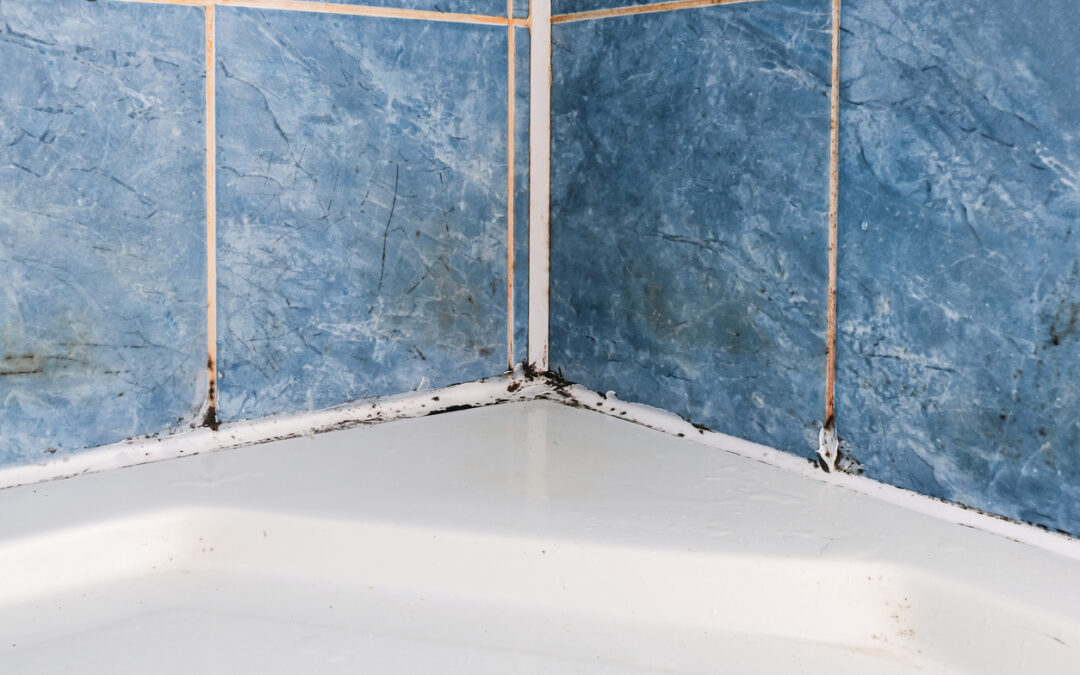
It is a common sight for many homeowners: you step into the shower, look down at the grout lines or along the base of your glass enclosure, and spot a dark, fuzzy patch taking hold. Your mind immediately jumps to worst-case scenarios. Is it just a cosmetic nuisance, or are you dealing with a toxic hazard?
Because bathrooms are constantly exposed to high humidity, steam, and standing water, they are prime breeding grounds for fungi. However, there is a massive difference between a superficial buildup and a deep-seated structural issue.
To protect your home and your family’s health, you need to understand the differences between black mold vs. mildew in the shower, how to safely treat each, and how to spot the telltale warning signs that your fungus problem is actually being triggered by a hidden structural leak.
The Comparison: Black Mold vs. Mildew
While mold and mildew are both types of fungi that thrive on moisture, they look, grow, and impact your home differently. Catching them early requires knowing exactly what to look for.
Shower Mildew: The Superficial Nuisance
Mildew is a surface-level fungus. It is a natural byproduct of a high-humidity environment and is usually easy to manage if caught early.
- Appearance: Mildew typically looks flat, powdery, or filmy. It often starts out as gray or white, turning yellow, brown, or pink as it ages.
- Growth Pattern: It grows strictly on the surface of non-porous materials like glass panels, plastic seals, or smooth ceramic tile faces.
- Texture: Powdery or downy, never deeply raised or thick.
- Health & Home Risk: Mildew rarely causes structural damage and can typically be wiped away with standard bathroom cleaners.
Black Mold: The Deep-Seated Hazard
Black mold (often Stachybotrys chartarum) is a much more invasive organism. It digs deeply into porous substrates and can pose serious health risks to sensitive individuals.
- Appearance: It presents as dark green, dark brown, or pitch black spots that cluster together in irregular, expanding shapes.
- Growth Pattern: Unlike mildew, mold penetrates deeply into porous materials. It eats into silicone caulk, grout lines, drywall, and subfloor wood framing.
- Texture: It usually features a raised, slimy, fuzzy, or velvety texture.
- Health & Home Risk: Mold releases spores that can impact indoor air quality. Because it roots itself beneath the surface, simply wiping it off with a spray will not kill the underlying root structure.
Identifying a Hidden Structural Leak
If you frequently clean your shower grout, run your ventilation fans, and wipe down your fixtures, but a dark, thick mold growth keeps returning in the exact same spot, you are likely not dealing with a simple cleaning issue. You are likely facing a hidden structural leak.
When waterproofing fails behind the scenes, water saturates the substrate, creating a permanent, hidden breeding ground for mold that bleeds through to your tile.
Look for these four critical warning signs that your mold issue is a structural plumbing failure:
- The Musty Odor: A persistent, heavy, earthy smell that doesn’t disappear after a thorough scrubbing usually points to stagnant water trapped behind walls or beneath the shower pan.
- Spongy Flooring or Soft Drywall: Press gently on the walls immediately outside your shower enclosure or on the floorboards surrounding the pan. If the material gives or feels soft, moisture has compromised the structural framing.
- Bubbling Paint or Peeling Wallpaper: Water moving behind drywall pushes outward, causing topical paint coats to bubble, crack, or peel away from the baseboard.
- Discolored Ceiling Below: If your bathroom is located on a second floor, look directly at the ceiling below it. Water rings, sagging drywall, or localized mold patches on the ceiling below indicate a failing shower pan or a leaking drain line.
Resolving Root Causes
Topical cleaning sprays can temporarily clear away surface mildew, but if a failed shower pan or ruptured pipe is fueling deep black mold growth behind your walls, a cosmetic fix will not solve the underlying problem.
To eliminate deep-seated mold permanently, you must stop the moisture source. This frequently requires removing compromised, soft drywall, replacing damaged subflooring, and rebuilding the area with modern, advanced waterproofing systems.
At CT Shower & Bath, we specialize in identifying behind-the-scenes structural issues before they compromise your entire home footprint. From full-service bathroom remodeling updates that replace failing, dated tile assemblies with engineered, multi-layered waterproof barriers, to upgrading your space with precision-cut glass enclosures, we ensure your home remains dry, safe, and beautiful.
Ready to secure your home’s structural health? Explore our step-by-step remodeling process or gather design inspiration from our completed transformations in our project gallery.
Contact our West Hartford design team today at 860-236-6500 to schedule your free, in-home layout and safety evaluation!